| s/y Nine of Cups Islas Perlas & the Darien Rivers July 2008 |
| Anxious to "get under way", we decided on a quick 10 mile motor-sail to Isla Taboga. We used Eric Bauhaus' The Panama Cruising Guide as our reference. Unfortunately, where the calm anchorage close to the beach used to be was now a mooring field. The anchorage further out was deep and rolly, but certainly acceptable for a night. It poured during the afternoon so we never went ashore. Our German friends, Brit and Axel aboard "Hello World" followed us, went ashore briefly and returned. We all agreed to leave the next morning. We headed to Islas de las Perlas (Pearl Islands of "Survivor" fame). This archipelago is comprised of 100+ islands located about 30 miles off the Pacific coast in the Gulf of Panama. The most notable of the islands is Contadora which is built up for tourist/resort trade. We opted not to visit. Instead we headed to Isla Bayoneta which appeared to have a protected anchorage and offered "an interesting beach with cowries on the west side" of the island. We moved to Punta Cocos and then, anxious to get to the rivers, motor-sailed to La Palma, capital of the Darien province. |
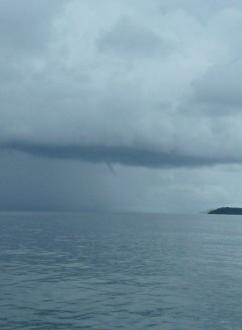
| We could see a squall approaching just as we were about to turn into the anchorage at Isla Bayoneta. Waterspouts were dipping from the clouds, but the squall passed quickly and we found the anchorage most delightful. A.long dink ride brought us to the west side where we found cowries, but not too big and not too many. We celebrated 4th of July here with "Hello World". No fireworks, but a rousing rendition of "The Start Spangled Banner"! |
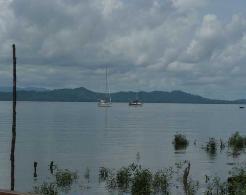
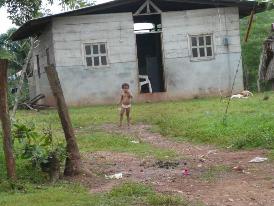
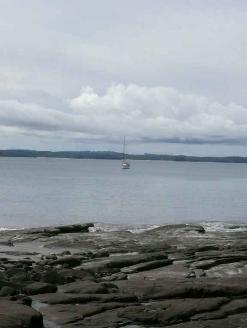
| We had visited and enjoyed Punta Cocos on our last trip. It is protected and very calm. The tidal changes here are significant ...15'+. Big change from the Carib. |
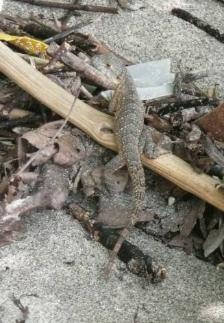
| A local anole climbs in the rubble of the rackline on shore. |
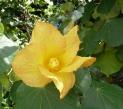
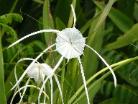
| Wild hibiscus were profuse and the spider lilies were uniquely beautiful. |
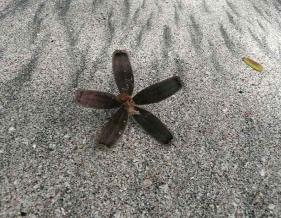
| A seed pod lays solitary in the sand. We found lots of sea beans and introduced Brit to these interesting curiosities on shore. |
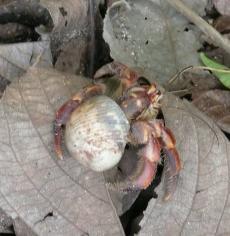
| Thousands of hermit crabs scuttled along the shore. |
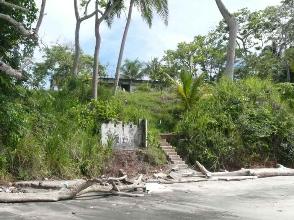
| Last time we were here, there was an Armada station. Now abandoned, only the ruins remain. |
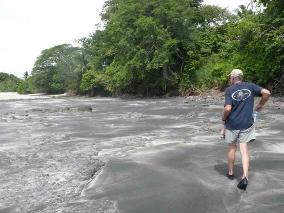
| David walks along the shore beachcombing for treasures. |
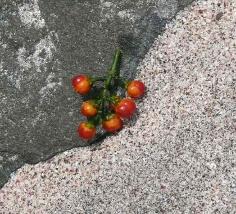
| The contrast of bright red berries on gray stone and brown sand caught my eye. |
| We left Punta Cocos early and with the help of the rising tide made it into the little anchorage of LaPuntita near La Palma by late afternoon. It didn't take long for the local Embera and Wounaans to realize they had some sales prospects anchored nearby and several visited in the next couple of days. We laughed remembering that Brit was originally concerned that she wouldn't have the chance to see any baskets. She soon had lots and lots of baskets aboard...and so did we! A day in LaPalma town (lost photos...ugh!) and we were ready to head up the Rio Sabana on the rising tide. The river is a lovely tributary off the Rio Tuira and Bauhaus' guide provided excellent advice and chartlets. We anchored off Islas Bellas in a calm, peaceful setting. |
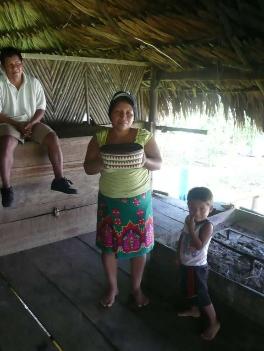
| We only chose one thing, but it was a unique, square-shaped, finely woven basket by weaver Cristelo Cheucoromo. We paid $60 plus a NY Yankees ball cap. Fair trade we thought! |
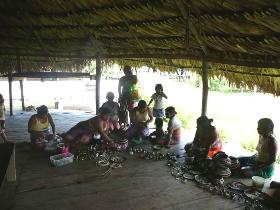
| In a matter of minutes, we had a huge choice of baskets, masks, jewelry, carvings and tagua figures to choose from. Not easy decisions! |
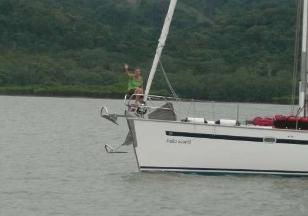
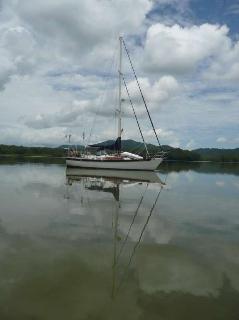
| At left, Cups is content anchored in mirror-glass waters. Above, Brit sits on the bow ready to drop the anchor as Hello World arrives at Islas Bellas. |
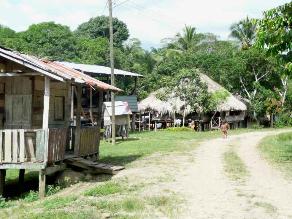
| Up river about 5 miles was the tiny Embera village of Puerto Lara. |
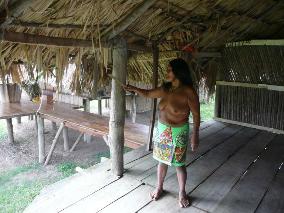
| We were met as we came ashore and led to the meeting hut. The clanging of the gong above, signalled everyone to bring their wares to show us. |
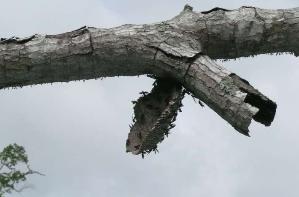
| A large hornet's nest hanging down from a dead branch over the water required some quick maneuvering as we didn't spot it until we were nearly under it. |
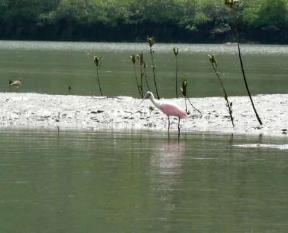
| We got the dinghy stuck in the deep mud as we tried to get closer for a good photo of this roseate spoonbill above. |
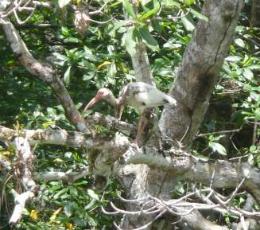
| Birdwatching and identifying was a good part of our enjoyment on the river. White ibis above. |
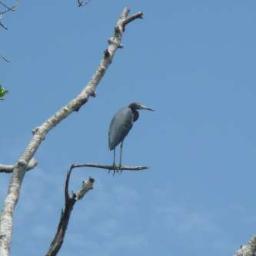
| Little blue heron poses majestically for a quick shot. |
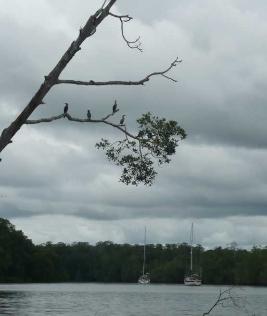
| After a couple of days, we moved down the Sabana and up the Rio Iglesias not far away. Nine of Cups and Hello World anchored in the Rio Iglesias as cormorants take note. |
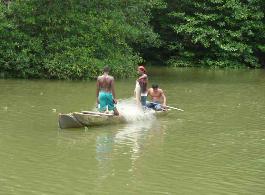
| Lucky for us we didn't proceed any further up the river as the locals had placed nets across the river to catch fish. |
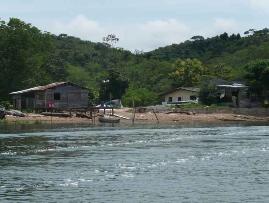
| We dinghied around until we found what looked like a small beach to land and got some directions to the tiny town of LaQuimba from a helpful fellow salvaging wood from the water. |
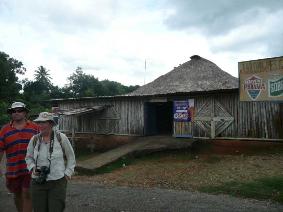
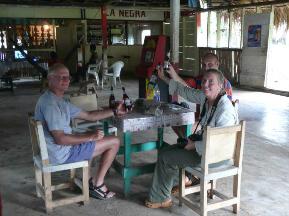
| We found a cantina serving very cold beer. |
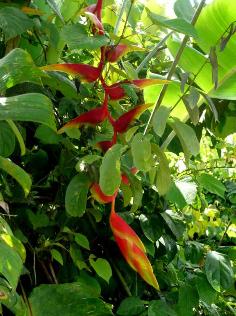
| The heliconia was strikingly beautiful. |
| Oops...got caught in her underwear! |
| Time for the long, hot walk back to the dinghies. |
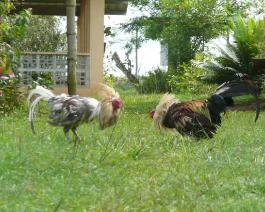
| Practicing for an upcoming cockfight. |
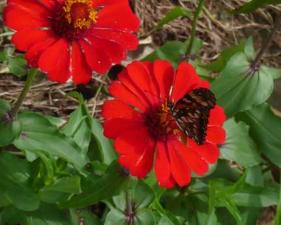
| Hundreds of butterflies fluttered around these brightly colored flowers. |
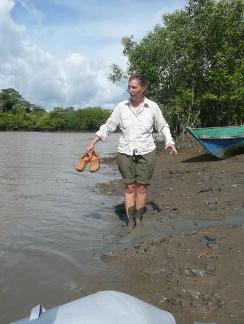
| The tide had receded when we got back to the dinks and oh what mud! I suggested mud wrestling, but no takers. |
| Gunkholing in the dinghies was an everyday pastime and most enjoyable. Lots of birds, but no other animals. |
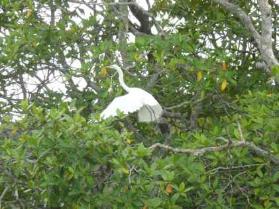
| A great egret takes to wing. |
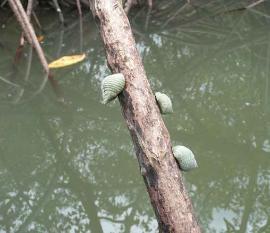
| Hundreds of green shelled snails clung to tree limbs in the tiny estuaries. |
| The petrol station..just go up the river and when you see the CocaCola sign, that'll be the place...and it was! |
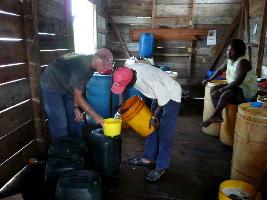
| At $5.60/gallon, it was lots of work to dispense diesel manually. First it was pumped into a pail from the 50 gallon drums with a handpump and then hand poured via a large, leaking funnel into our jerry jugs. |
Cups and HW anchored off La Palma.
| Travel along as we head back down the Rio Tuira and started our trek south along the Panamanian coast to Puerto Pina, our last stop before heading to Ecuador. |
Check out Hello World's website
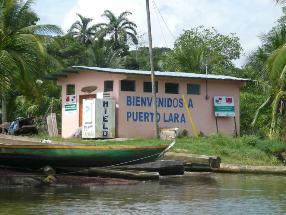
| Main Street, Puerto Lara |
