| s/y Nine of Cups Maritime Canada Summer 2001 |
| From Mt. Desert Island, we day-tripped again, anchoring in small, secluded coves with deep, deep water and significant tidal changes. As we ventured further Downeast Maine there were fewer amenities, fewer towns and we saw fewer boats. We were heading for Canada and excited about the prospect.Canada is a huge country with lots of coastline and a very short summer. |
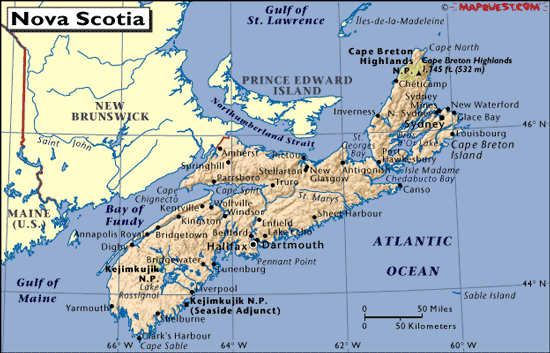
| The Dominion of Canada Capital: Ottawa Population: 33,311,400 Area: 3,851,877 sq mi; 2nd largest country in the world Languages: English, Canadian French Highest point: Mount Logan, 19,551 ft Lowest point: Atlantic Ocean, 0'
|

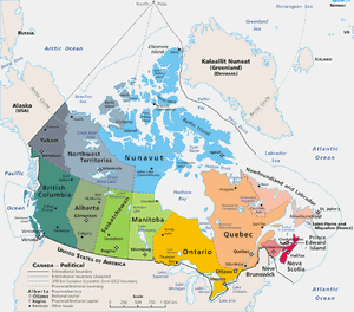
| A founding province of Canada, Nova Scotia (New Scotland) is nearly surrounded by the Atlantic Ocean, and is known for its high tides, lobster, fish, blueberries and apples. |
| Head Harbour Light on West Quoddy Head and the Canadian border. We arrived at Campobello Island, New Brunswick summer home of President Roosevelt. We would clear customs here. Made easy by CanPass for U.S. citizens in private vessels, a toll free call from a nearby motel cleared us in. |
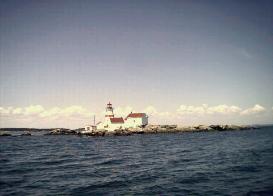
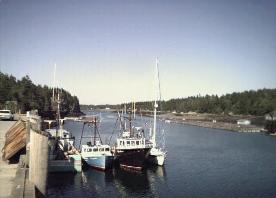
| Head Harbour was a bit crowded and not very wide. We were told “rafting” was the norm here...no permission needed, just tie up to the most convenient boat. That’s little Nine of Cups, 4th boat out, rafted to the fishing trawler, Miss Hope. With the huge tidal changes and fixed docks, we found the ascent to the top of the wharf at low tide to be about a 20’ slimy, vertical climb. |
Very cool provincial flag! |
| Welcome to Canada - Campobello Island - 44N58 / 066W54 |
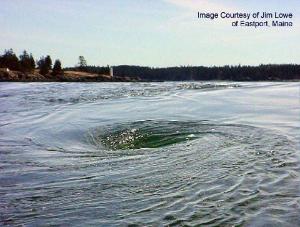
| Anticipating being sucked down into the abyss, we approached with caution at high slack tide and made it through without any difficulty. Thank, Neptune! |
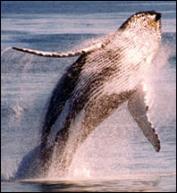
| We saw lots of whales in the Bay of Fundy. The Coast Guard (U.S. and Canadian) requires that you stay a reasonable distance from them. However, we shut off our engine one day and just drifted along to watch a large pod of about 10 whales put on a terrific show. The photo was nicked off the net. My camera wasn't enough to catch the acrobatics. |
| The Bay of Fundy boasts the highest tides in the world. Burntcoat Head in Minas Basin holds the world’s record for the highest tide at 54 feet. The biggest tidal differential we saw was about 35 feet which was enough for us. It poses a whole new set of complications when anchoring. Each day 100 billion tonnes of seawater flows in and out of the Bay of Fundy during one tide cycle ... more than the combined flow of all the world’s freshwater rivers! |
| Old Sow Whirlpool is the largest tidal whirlpool in the Western Hemisphere and is located off off the southwestern shore of Deer Island, New Brunswick, Canada between that island and Moose Island, the principal island of Eastport, Maine. According to popular etymology, the name "Old Sow" is derived from "pig-like" noises the whirlpool makes when churning. |
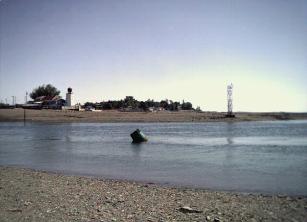
| From Campobello, we headed to St. Andrews- by-the-Sea, Canada’s oldest seaside resort town located on the New Brunswick coast. When we arrived, we had lots of water. Just a few hours later, the markers were laying in mud. |
| St.Andrews-by-the-sea, New Brunswick, Canada - 45N04.19 / 067W03.14 |
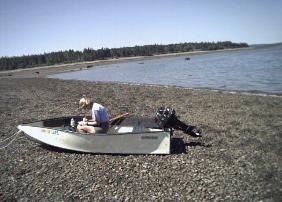
| Waiting for the tide…we ventured over to Navy Island for a hike and found lots of great sea glass. On our return, the dinghy that was floating when we left, was high and dry. |
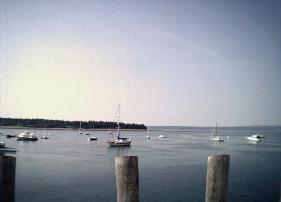
| Cups on a moored off the wharf |
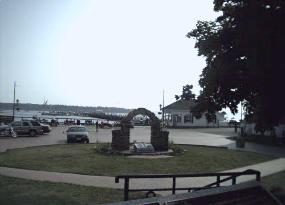
| St. Andrews town square |
| It's a small, small world... Remember Jelly’s near fatal adventure in Charleston where she was rescued by Andy on the “Avontuur”? Small world that it is, we accidentally met Andy in the laundromat one day. Read the whole story here, Jelly's Hero. |
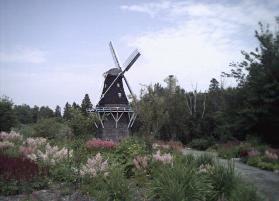
| We visited Kingsbrae Gardens on one of our forays ashore. One of the top ten Public Gardens in Canada, it is fashioned after the Kew Gardens in England. |
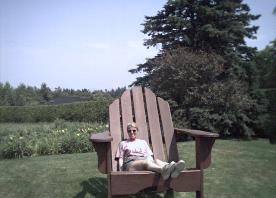
| Big girl...big chair |
| From St. Andrews, back across the Bay of Fundy and to isolated Grand Manan Island. What a treat to find free moorings in the North Head Harbor. There are a couple of shops, a grocery and a ferry terminal here. |
| Grand Manan Island, New Brunswick - 44N71 / 066W86 |
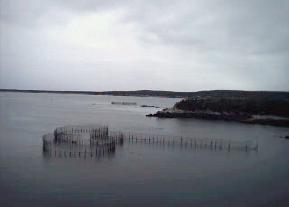
| Fishing “weirs” (pronounced wares) are common in this area and are traps for catching herring. |
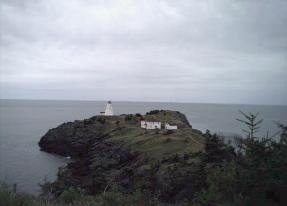
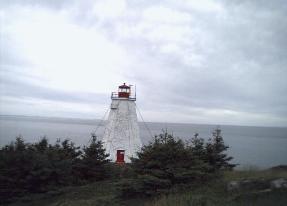
We've seen many lighthouses, but not one
more picturesque than Swallowtail Light on
Grand Manan.
more picturesque than Swallowtail Light on
Grand Manan.
| We were able to walk to Swallowtail Light . You’ll notice that close-up, it’s not quite as pretty as from afar… yet another life lesson. |
| Bloody Caesar ... A decidedly Canadian cocktail concocted of Clamato juice and vodka, served in a glass with a peppered rim. |
| Grand Manan: Dulse Capital of the World This reddish,edible seaweed, known locally as 'Dark Harbour' dulse, is hand picked at low tide on the western side of the island. We tried it the way most islanders prefer it, as a snack food, fresh dried and eaten with the fingers. It's an acquired taste! |
| From Grand Manan, we sailed across the Bay of Fundy to Nova Scotia. We landed first in Yarmouth and stayed a few days. We had been here summer 2000 via “The Fast Cat” and it was fun coming back under our own power. We enjoyed a small dinner theatre production and wandering about town. We were able to pick up more Canadian charts for Nova Scotia as well as A Cruising Guide to Nova Scotia: Digby to Cape Breton Island, Peter Loveridge (1997). From Yarmouth, we moved to the south shore and oh what a delight. Our first stop…Shelburne, a Loyalist town founded in 1783. Loyalists were those loyal to Britain during our Revolutionary War who fled the U.S. to Canada after the war. |
| We anchored in Shelburne Harbour and were officially welcomed and greeted by the “Ambassador”, Harry O’Connor, who has supposedly welcomed thousands of boats to Shelburne over the years. Above, the Shelburne Dory Shop where they still make custom dories to this day. |
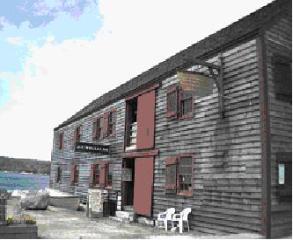
| Dory – a specific type of boat used as small fishing boat on larger fishing schooners. The construction on them is different in different towns (Shelburne vs. Lunenburg, for instance). |
| From Shelburne to Lunenburg. The picturesque nature of these towns is unbelievable. Each town has some unique aspect to share including museums illustrating their maritime past. The Canadians are warm and welcoming and proud to share their history and culture with us. |
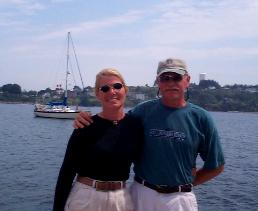
| The crew posing with Nine of Cups in the background. Photo: Jan on "Bandersnatch" |
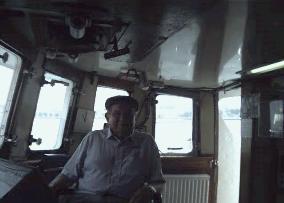
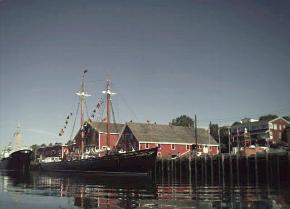
| Lunenburg wharves…those are Lunenburg dories lined up along the wharf by the Fisheries Museum buildings. |
| Shelburne, Nova Scotia - 43N75 / 065W32 |
| Lunenberg, Nova Scotia - 44N04 / 064W03 |
| Armdale YC Marina, Halifax, Nova Scotia - 44N37.59 / 063W36.47 |
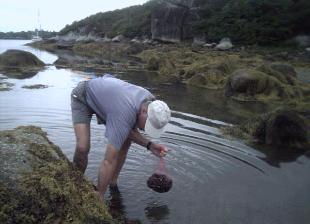
| Rogue's Roost is a small inlet with a narrow passage which was used as a hideout for rum-runners. In recent years it is a popular destination to anchor. Above, David collects mussels for dinner. |
| We spoke at length with Captain Mitchell aboard the Grand Banker. He had captained a fishing vessel his whole life. Hailing from Newfoundland, his old fishing grounds were in the Flemish Cap. Our enjoyable chat with him made us think about visiting Newfoundland. |
| The Fisheries Museum of the Atlantic in Lunenberg is a fascinating place to visit. We had the opportunity to board and tour a large fishing trawler as well as a Grand Banker. The displays were excellent and included an interesting exhibit on the rumrunners who found running illegal liquor into the U.S. much more profitable than fishing. |
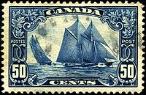
| The Bluenose, pictured on Canadian dimes and commemorative stamps, was the Queen of the North Atlantic fishing fleet and built in Lunenburg. |
| Nova Scotians have been called Bluenoses since the 1700's. Reason: Planting and exporting of Irish Bluenose Potatoes, blue marks on the noses of fishermen left by blue-dyed mitts and the nickname given to the Nova Scotia British troops which occupied New York City and Boston during the American Revolution. |
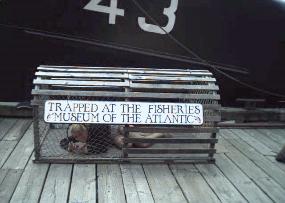
| Yup, David convinced Marcie to climb inside this giant lobster trap for a photo. |
| The term rum-running is more commonly applied to smuggling over water; bootlegging is applied to smuggling over land. |
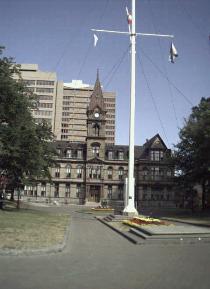
| From Lunenburg to Halifax, Nova Scotia’s provincial capital, and a beautiful city. We anchored first at the yacht club outside of town, but ended up moving to an anchorage right in the harbor across from the city so we could dinghy the mile across the harbor to the dinghy dock to explore the town. |
| A resident of Halifax is referred to as an Haligonian. |
Halifax Claims to Fame…
|
| We contemplated heading through the Canso Passage to Prince Edward Island or going farther east and north to Cape Breton or even further north to Newfoundland, but it was August now and the summer was ending all too quickly. Time to head back to the U.S. We had missed several scenic spots on our way to Halifax so stopped on our way back west. We hurried along now. Rogue's Roost, Chester, Mahone’s Bay, Lehave and then the big push overnight to Rockland, Maine where we cleared back into the USA. We had visited Canada by plane and car several times in the past for both business and pleasure, but visiting by boat was so very different. We saw so little of this magnificent country...mere glimpses of Nova Scotia and New Brunswick. What we did see was fantastic and the thought of remaining here for another season crossed our minds...just for a moment... until we could see our breath in the mornings. |
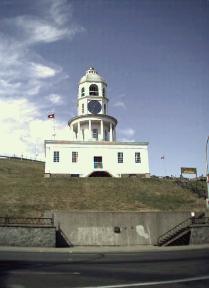
| The Old Town Clock is a symbol of the city and sits at the base of Citadel Hill. Designed by the Duke of Kent (father of Queen Victoria), it was given as a gift to the city in the late 1700s. |
| Halifax Town Hall |
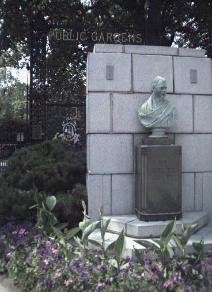
| Halifax Public Gardens |
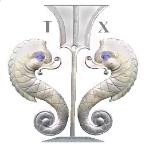
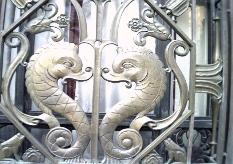
| Probably our fondest memory and souvenir of Halifax is the photo we took of a seahorse gate which David massaged and turned into our ship's log. Check out "What's in a Name" |
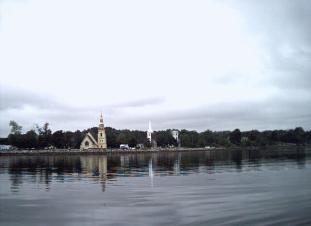
| A famous sight…the Three Churches of Mahone's Bay. |
Return to the USA with us and finish our
journey south in 2001
journey south in 2001